Five lessons from five years of scrap yard simulation
After simulating scrap yards at more than 15 steel plants, these are the five things we see getting underestimated every time — from pile height effects to non-linear truck scaling.
Continue
The fastest way to simulate your production and logistics
without compromising.

Industry-leading simulation models, honed through 100+ plant configurations.

Unifying metallurgical and logistical competence for a seamless collaboration.

Achieving the shortest project timelines to accommodate any schedule.











We offer simulation models for every part of the value chain of steel making. Explore key areas with essential model features and the typical challenges our simulations address.
From crane kinematics to scrap pile dynamics — our models capture every detail of your scrap yard operations to optimize fleet, layout, and loading times.
Learn More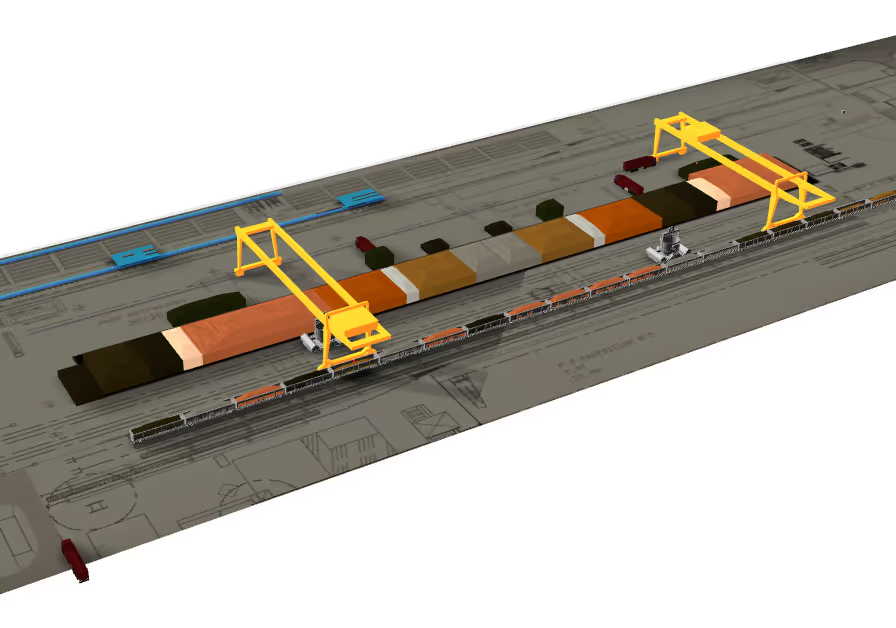
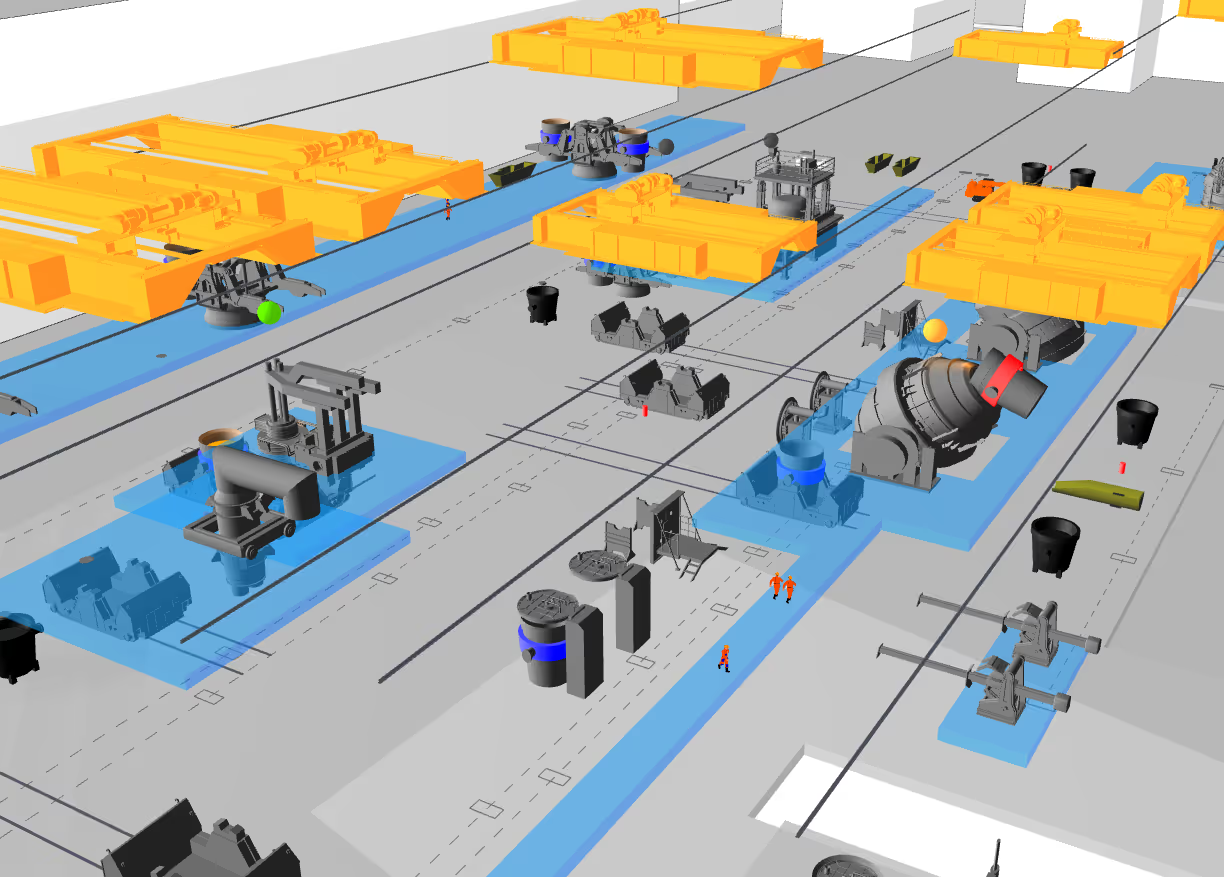
Cranes define your melt shop's throughput. Our simulation resolves crane conflicts, ladle logistics, and secondary metallurgy dynamics so you invest with confidence.
Learn MoreFrom caster runout to storage to dispatch — we simulate blocking, reshuffling, and crane interference to find your true capacity ceiling.
Learn More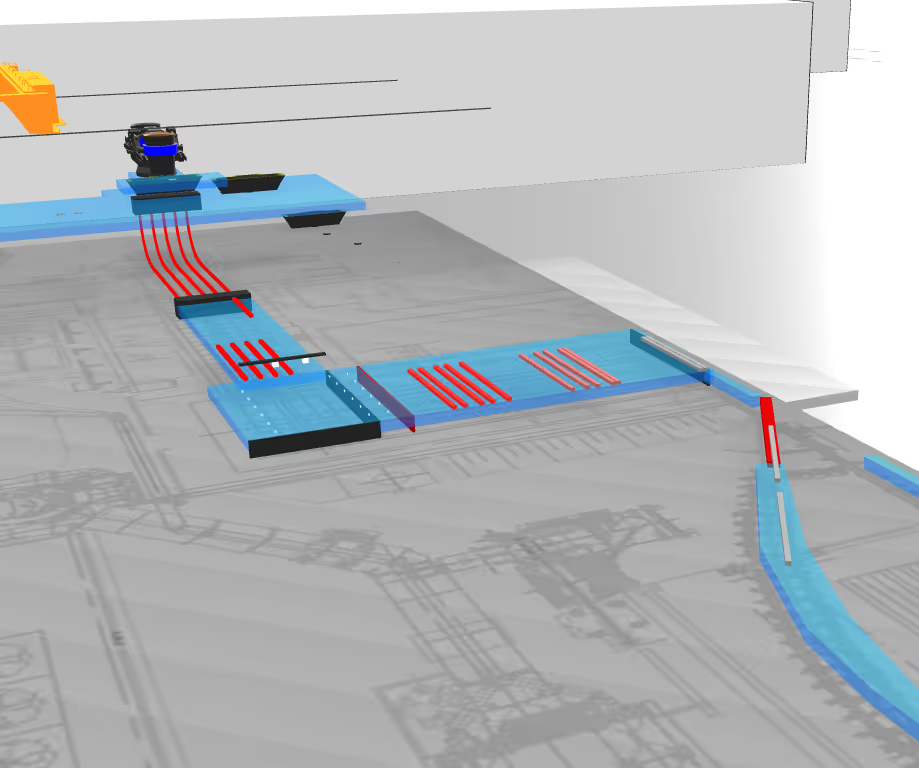
From consulting to software to dashboards —
everything you need to simulate, analyze, and optimize your steel plant.

Data-driven consulting backed by simulation. From data analysis to final report.
Learn More
Purpose-built for steel plants. Crane kinematics, ladle tracking, scheduling — no coding required.
Learn More
Turn simulation results and production data into actionable KPIs and scenario comparisons.
Learn MoreGet the full case study collection — 4 real steel plant projects with results.

"I highly recommend FESIOS as a reliable partner!"

"Extremely time and money saving work"
A simulation project typically takes 6-12 weeks from start to the delivery of the final report.
The main phases are:
2-3 weeks: Creating and validating the base model of your plant and conducting the on-site workshop. The timeframe depends on the complexity of your plant (e.g., the number of casters) and whether all data is available in a timely and comprehensible manner.
3-4 weeks: Building the new plant configuration, running the simulation, and discussing the initial results and iterations for improvement. For smaller projects, this could be the final phase.
3-5 weeks: Depending on the project scope and whether multiple plant configurations or phases need to be simulated and compared, this phase includes running the simulations, discussing the results, and making improvements.
1 week: Finalizing the project, and creating the final documentation.
We collect two types of data:
General Information: This includes site and equipment details such as plant layouts, relevant cross-sections, height information, and equipment specifications (main dimensions, speeds, times). This data is essential for building up the model.
Production Data: These are records of your operational activities, automatically collected from your IT system. For the melt shop, this includes historical production data with timestamps indicating when each process started and stopped. We prefer to analyze a full year's production data to assess process times, production routes, sequence lengths, and other relevant information for each steel grade. This data is used to create realistic production schedules and serves as a validation baseline.
If the plant is not yet operational or production data is missing, we can leverage our extensive experience with other production data to fill the gaps and make informed assumptions.
Two key components are involved: the technical validation of the model based on data, and the residual uncertainty, which must be managed through the modeller's expertise and the robustness of the simulation model.
We achieve technical accuracy in our models through a thorough validation phase in every project. We start with what you know best: your current plant. We create a base model of your plant and use historical production data to validate the simulation. For melt shops this involves comparing process start timestamps and KPIs like time steel spends in ladles, sequence lengths, number of ladles in the hot cycle, and waiting times. Thorough validation ensures the model closely mirrors reality. New plant configurations, equipment and production processes can now be incorporated and compared against the validated base model, knowing that the underlying dynamics are capture correctly.
However, a model is always a simplification of the real world, so there can never be a guarantee that it is 100% correct. To address any remaining uncertainty, we depend on the setup and the execution of the work. The higher the experience of the simulation expert and the more iterations and variations the simulation model undergoes, the more likely the results are to be trustworthy. This is what sets FESIOS apart from other simulation providers.
Yes, you can run your own simulations with a user license.
Our software is specifically designed for the production areas and challenges of steelmaking. It is user-friendly and requires no prior experience in modeling, scripting, or coding. Best of all, if you encounter any issues, you can easily reach out to us for swift assistance.
After simulating scrap yards at more than 15 steel plants, these are the five things we see getting underestimated every time — from pile height effects to non-linear truck scaling.
ContinueA production increase to 1.3 million tonnes per year didn't just challenge the melt shop — it tested the scrap yard too. How FESIOS identified and resolved the bottleneck.
ContinueThe full technical story behind ArcelorMittal Belval's production enhancement — from scrap yard pile height dynamics to run-out area bottlenecks. How a single simulation model covered the entire production chain.
ContinueAs metallurgists, logistics experts, and software engineers, we channel our collective energy into one mission:
"To advance the steel industry by providing the world's best simulation solutions that drive efficiency, sustainability, and excellence"
Since 2020, our team of 5 has completed 30+ projects and modeled over 100 plant configurations.
Discover the difference.